
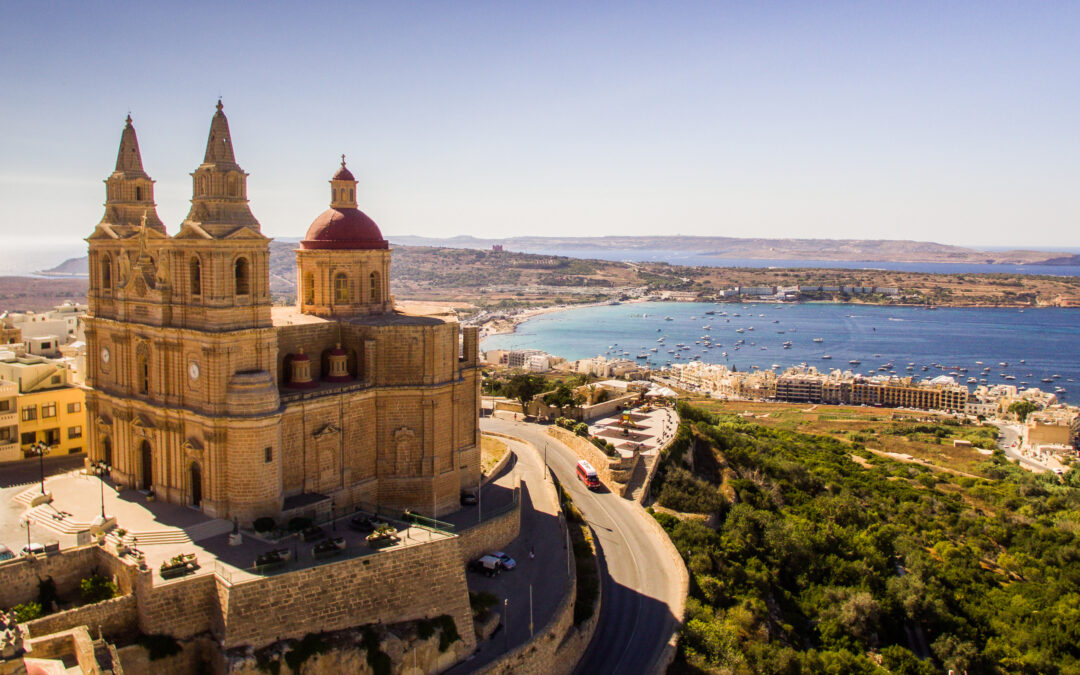
Malta packs a lot into a small package. It is an archipelago where the Mediterranean meets British heritage—think red post boxes, driving on the left and English as a joint official language—but with a climate and history that are distinctly southern European.
For international buyers, the appeal is often strategic as much as it is lifestyle. Malta offers some of the most attractive tax residency schemes in Europe, making it a magnet for retirees and high-net-worth investors.
However, the property market is split into two distinct tiers for foreigners: standard homes which come with strict “one property” limits, and luxury developments where you can buy as freely as a local. Understanding this split is the key to buying successfully.
This guide walks you through the buying process in Malta in 2026, from navigating the Konvenju (Promise of Sale) to understanding the costs. We also cover a critical financial factor: your currency exchange. You will be buying in euros, meaning your budget is exposed to market volatility. We explain how to manage that risk.
Can foreigners buy property in Malta?
Yes, but the rules depend entirely on where and what you buy.
- Special Designated Areas (SDAs): This is the easiest route. SDAs are luxury lifestyle developments (such as Tigné Point, Portomaso or SmartCity). In these areas, there are no restrictions. You can buy as many properties as you like and rent them out freely without needing a permit.
- Standard Property (AIP Permit): If you buy a regular home outside an SDA (like a farmhouse in Gozo or a townhouse in Sliema), you generally need an AIP (Acquisition of Immovable Property) Permit.
- You are usually limited to buying one property only.
- It must be for your personal residential use (you generally cannot rent it out to tourists).
- There are minimum value thresholds you must meet to qualify (check the latest rates, but typically over €169,000 for a house/flat).
- EU Citizens: Have slightly more freedom. If you have lived in Malta for five years, you can buy without an AIP permit.
Visas and residency in Malta
Malta is famous for its residency-by-investment programmes, which remain some of the most robust in Europe.
- Malta Permanent Residence Programme (MPRP): A popular route for non-EU nationals. It requires a combination of property investment (buying a property worth at least €300,000 in the south/Gozo or €350,000 elsewhere, OR renting) plus a government contribution (approx €28,000 – €58,000) and a charitable donation.
- Global Residence Programme (GRP): Designed for non-EU nationals seeking special tax status. You pay a flat tax of 15% on foreign income remitted to Malta (subject to a minimum annual tax of €15,000). You must buy or rent a high-value property to qualify.
- Nomad Residence Permit: For remote workers from outside the EU earning at least €2,700 gross per month.
Why buy property in Malta?
Beyond the residency perks, Malta offers a unique stability:
- English Language: Official documents and contracts are often in English, removing the “translation anxiety” of other markets.
- Safety: consistently ranked as one of the safest countries in the EU.
- Connectivity: A strategic hub with excellent flight connections to the UK, Europe and the Middle East.
The property-buying process in Malta
The process revolves around one key document: the Konvenju.
- Hire a Notary: In Malta, the Notary Public acts on behalf of the government but is chosen by the buyer. They conduct the crucial research into the property’s title.
- Promise of Sale (Konvenju): This is the binding preliminary contract.
- It details the price, conditions (like structural surveys or bank loans) and the completion date.
- You typically pay a 10% deposit.
- You pay 1% provisional Stamp Duty at this stage.
- The Konvenju is usually valid for three months to allow for legal searches.
- AIP Application: If you are buying outside an SDA, your Notary applies for your AIP permit during the Konvenju period.
- Final Deed (Kuntratt tal-Bejgħ): Once searches are clear and the AIP is issued, you meet at the Notary’s office (or the bank) to sign the final deed and pay the balance.
Costs of buying a property in Malta
Budgeting is relatively straightforward in Malta as the main tax is Stamp Duty.
- Stamp Duty: Generally 5% of the purchase price.
- Note: You pay 1% when signing the Konvenju, and the remaining 4% on the final deed.
- Gozo Incentive: Historically, the rate for buying in Gozo has sometimes been reduced (often to 2%). Always check if this incentive is active for 2026.
- Notary Fees: Approx 1% to 2% + VAT (depending on the complexity of title research).
- AIP Permit Fee: A nominal fee (approx €233).
- Agency Fees: Typically paid by the seller in Malta, but always check your contract to ensure no “finder’s fee” has been added.
Why currency exchange is critical
You will need to send money at specific times:
- 10% Deposit (at Konvenju)
- 1% Provisional Stamp Duty
- Final Balance (at Final Deed)
Malta uses the euro. If your funds are in pounds, dollars, yen or krone, the price of your Maltese home is constantly moving.
For illustration, a €400,000 apartment could cost:
- £338,000 at a GBP/EUR rate of 1.18
- £357,000 at a GBP/EUR rate of 1.12
That is a difference of roughly £19,000. Because the Konvenju period typically lasts three months (or longer if AIP is delayed), you are exposed to currency risk for a quarter of a year.
How to manage currency risk
You can reduce this uncertainty with a plan.
- Forward contract: Fix today’s exchange rate for your final deed payment. This locks in the cost of the property in your home currency as soon as you sign the Konvenju. It ensures your budget doesn’t spiral while the Notary does their searches.
- Market order: If you are waiting for the right property, set a target rate. We will automatically buy euros for you if the market hits that level.
Why use a specialist currency provider?
Maltese banks are famously strict on compliance. Opening an account as a non-resident can take time and transfers from abroad are scrutinized for “Source of Wealth”.
Smart Currency Exchange can verify your funds in advance and ensure the transfer to your Notary’s client account is smooth. We provide the necessary documentation to satisfy Maltese banking compliance, preventing last-minute delays at the deed signing.
Making transfers on time
The Konvenju has a strict expiry date. If you do not complete by that date (and haven’t agreed an extension), the contract can become null and void.
- Ensure your funds are ready well before the expiry date.
- Account for bank holidays in Malta (which has many public holidays).
- Use a Forward Contract so you know exactly how much sterling you need to send to cover the euro balance.
In summary: buying property in Malta
To make your purchase smooth and secure, follow these rules:
- Decide if you want an SDA (unrestricted) or a standard home (AIP restricted).
- Budget for 5% Stamp Duty.
- Protect your budget from euro volatility using a Forward Contract during the Konvenju period.
Frequently Asked Questions about buying property in Malta
Can I rent out my property?
If you buy in an SDA (Special Designated Area), yes, freely. If you buy a standard property with an AIP permit, generally no – it must be for your personal use only.
Is it safe to buy property in Malta?
Yes. The Notary is a public official responsible for ensuring the title is clean. However, always ensure your Konvenju (Promise of Sale) includes a condition that the purchase is “subject to AIP permit” (if applicable) and “subject to bank loan” if you need finance.
Can I get a mortgage in Malta?
Yes. Maltese banks lend to non-residents, typically up to 60-70% of the property value. You will need to provide life insurance and extensive proof of income.