

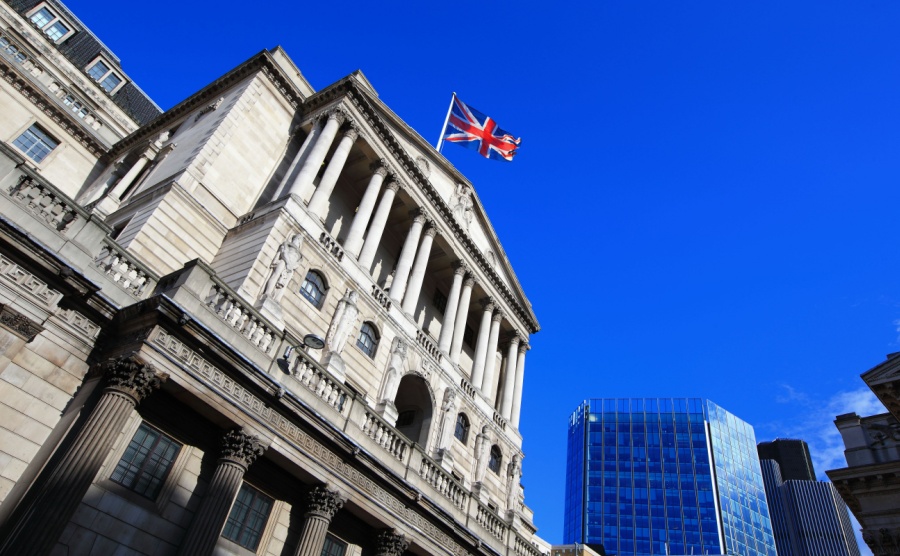
In early trading this morning the pound reached its best against the euro since last summer. It is also at a six-week high against the US dollar, after a day when central bankers and monetary policymakers were in the driving seat.
The background remains oil, with the Bank of England’s Monetary Policy Committee (MPC) voting on interest rates on a day that the oil price hit €126 per barrel – its highest for four years. So although just one of the MPC voted for an interest rate rise yesterday to combat inflation (notably the Bank of England’s senior economist), its governor Andrew Bailey was in no doubt of the danger, saying we are in for “a very big shock”.
Still, it’s all been good news for sterling, on a day when a mass of economic data came out and the European Central Bank also held interest rates – albeit with theirs at almost half the UK’s, its main rate being 2% to the UK’s 3.75%. Despite that low rate, much of the data coming out of the eurozone was disappointing, with Gross Domestic Product (GDP) for the bloc dipping to 0.1% for the first quarter of 2026, while inflation rose to 3%. All of this was worse than the markets had predicted and a clear sign of stagflation.
The currency winner of the day was the Japanese yen, which gained around 2% on the day against most pairs after Japan’s Finance Minister said authorities were considering taking decisive action.
Few would praise the present British leadership for decisiveness, and next week the local elections are a particularly risky event for Keir Starmer. If his Labour Party do exceptionally badly it could well trigger a leadership challenge – a potential risk for sterling.
Elsewhere, in business news, a report in the Financial Times says that 700 rental homes are hitting the market every month as British landlords sell up. That is a rise of 9% on last year – ahead of the Renters Right Act coming into force. The report says that this is mainly being driven by smaller scale landlords reassessing their investments.
Despite all this, the Nationwide has just revealed UK house prices to be increasing by 3% per year – 0.4% last month – when a sharp fall was expected. It follows a raft of surprisingly upbeat data last week too, in the UK. Is this all just irrational optimism, spring being in the air, or are economists just getting it wrong?
Make sure any upcoming transactions are protected against the risks of sudden market movements. Secure a fixed exchange rate now with a forward contract; call your account manager on 020 7898 0541 to get started.