
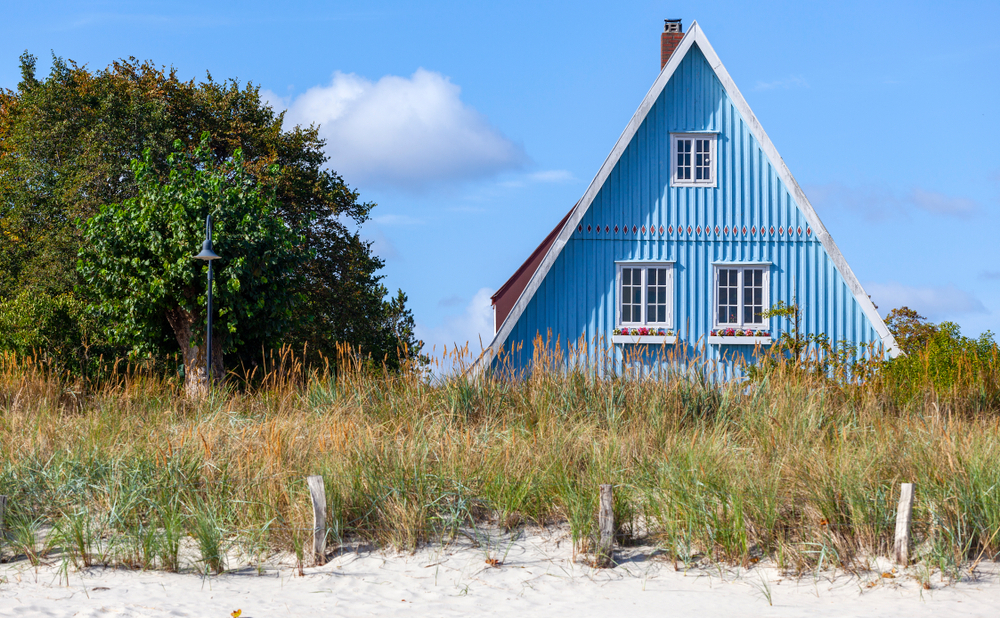
As the Mediterranean swelters, searches for ‘coolcations’ and holidays on northern coasts have rocketed. If you’re looking for a holiday home on a Baltic, North Sea or Irish coast, where should you start looking and how much will you pay?
For decades, the British dream of a place in the sun meant Greece, Spain, Turkey or Italy. But as Mediterranean summers grow hotter, more crowded and more prone to wildfires, a growing number of buyers are looking north instead — to the cooler Atlantic, North Sea and Baltic coasts, where the weather is milder, the pace is gentler and the seasons still turn. Welcome to the age of the “coolcation”.
The rise of the coolcation
The word “coolcation” — a blend of “cool” and “vacation” — was coined by Condé Nast Traveller in late 2023 and has since gone from niche buzzword to genuine travel movement. The numbers behind it are striking.
Travel giant Trip.com reported a 74% year-on-year jump in searches for cooler destinations at the start of 2026, and a 237% surge in summer searches for cool-climate escapes over the peak June-to-August window. Google Trends has recorded roughly a 300% annual rise in searches for “cooler holidays”. Booking.com data shows summer searches climbing sharply for Finland (+27%), Norway (+33%) and Slovenia (+29%), while the Scandinavian airline SAS has seen bookings from southern Europe to Norway rise dramatically.
The drivers are easy to understand: record-breaking heatwaves, wildfires across southern Europe, over-tourism in honeypot destinations, and a growing preference for comfort, nature and space. For holidaymakers, that means a change of destination. But for a growing group of buyers, it means something bigger – rethinking where to put down roots for a holiday home, an investment, or an entirely new chapter in retirement.
If your picture of a bolthole abroad has always been a sun-baked terrace, it may be worth widening the lens. The coasts of Ireland, the Low Countries and the Nordic nations offer their own powerful appeal — and, in several cases, prices that compare favourably with the Mediterranean’s most sought-after spots.
Four seasons, not just cooler summers
The coolcation is often framed as a summer story, but the deeper appeal of northern Europe is that it delivers across all four seasons.
Summer brings long, luminous days – and in the far north, the midnight sun – with temperatures that let you actually enjoy being outside. Autumn is where the Danish concept of hygge comes into its own: candlelit interiors, woodsmoke, cinnamon buns and cosy evenings as the light fades. Winter transforms these regions entirely, with snow, skiing, Christmas markets, saunas and the chance to catch the Northern Lights. And spring arrives crisp and green, without the crowds. A home on a northern coast isn’t a place you visit only in August; it’s a place that rewards you all year round.
There’s a wellbeing dimension too, and it’s borne out by the data. In the 2026 World Happiness Report, Finland was named the world’s happiest country for the ninth year running, with the Nordic nations filling five of the top six places – Iceland, Denmark, Sweden and Norway all ranking among the happiest countries on earth.
These are consistently high performers on liveability, safety, healthcare, education, social trust and work-life balance. Buying here isn’t just about escaping the heat; it’s about buying into a way of life that repeatedly tops the global quality-of-life tables.
The three seaboards
The cooler alternatives to the Med fall broadly into three coastlines, each with its own character:
- The Atlantic coast — wild, dramatic and green, epitomised by Ireland’s west and southwest, where surf beaches, cliffs and fishing villages meet a famously warm welcome and no language barrier.
- The North Sea coast — the wide skies and long sandy beaches of Belgium, the German Frisian islands and Denmark’s west coast, with bracing air, seaside resorts and UNESCO-protected Wadden Sea landscapes.
- The Baltic coast — calmer and more sheltered, running along Germany’s northeast, the Danish islands, southern Sweden and Finland’s vast archipelago, with sailing, thousands of islands and classic Scandinavian summerhouse culture.
Below, we look at seven countries across these three seaboards. For each, we cover the appeal, whether you can actually buy, how prices compare with the Mediterranean, the currency, the all-important 90-day rule, your options for living there full-time, and a few places to start your search.
Ireland — the Atlantic option that’s easiest of all for Britons
The appeal. Ireland’s Atlantic coast is one of Europe’s great scenic drives – the Wild Atlantic Way runs 2,500km from Donegal to West Cork, past surf beaches, sea cliffs, colourful harbour towns and some of the friendliest pubs anywhere. Add short flight times, a shared language and deep cultural ties, and Ireland is arguably the most natural fit for a UK buyer anywhere in this list.
Can you buy? Yes, freely. There are no restrictions on UK citizens (or any nationality) buying property in Ireland, whether as a holiday home, an investment or a permanent residence. Irish banks do lend to non-residents, though loan-to-value ratios for holiday-home or buy-to-let mortgages are typically capped lower (often around 65–70%).
Prices versus the Med. Ireland has seen strong price growth and isn’t a bargain-basement market. But move to the western and southwestern counties and value improves markedly – counties such as Donegal, Sligo, Mayo, Clare and Kerry can be surprisingly affordable, and comparable to or cheaper than prime coastal Greece or the Spanish costas.
The currency. Ireland uses the euro.
The 90-day rule. This is where Ireland stands apart. Under the long-standing Common Travel Area (CTA) there is no cap on how long you can stay.
Living there full-time. No visa, permit or income threshold is required, under the CTA. British citizens have the right to live, work, retire and access healthcare in Ireland freely — you can simply move.
Where to start your search. West Cork (Kinsale, Clonakilty, Schull), the Dingle and Iveragh peninsulas in Kerry, coastal Clare around Lahinch, Connemara and coastal Galway, and the beaches of Sligo and Donegal.
Belgium — an underrated North Sea coast on your doorstep
The appeal. Belgium’s 67km of coastline packs in wide sandy beaches, elegant belle-époque resorts, a famous coastal tram and superb food. It’s easily reached by Eurostar and ferry, making it ideal for frequent short breaks, and it sits within easy reach of Bruges, Ghent and Brussels.
Can you buy? Yes, with no restrictions on foreign buyers. Do budget carefully for transaction costs, though: Belgian registration duties and notary fees are among the highest in Europe.
Prices versus the Med. The coast spans a wide range. Knokke-Heist is one of Belgium’s most expensive addresses and can rival prime Mediterranean resorts, while towns such as Ostend, Blankenberge and De Panne are considerably more moderate. Overall, coastal Belgium is often cheaper per square metre than France or England, but the high buying costs narrow that advantage.
The currency. Belgium uses the euro.
The 90-day rule. Yes. Belgium is in the Schengen Area.
Living there full-time. Buying property gives no residence rights, and Belgium has no golden-visa scheme. The main routes for Britons are a Type D long-stay visa via the “professional card” for self-employment, or a residence permit for people of independent means (self-sufficiency).
Where to start your search. Knokke-Heist for the premium end. Ostend, De Haan, Nieuwpoort, De Panne and Blankenberge for better value.
Germany – from Frisian islands to the Baltic
The appeal. Germany offers two very different coasts. The North Sea side has the Frisian islands – chic Sylt, plus Norderney and Juist – and the mainland surf-and-spa town of St Peter-Ording, fronting the UNESCO Wadden Sea. The Baltic coast is calmer and sunnier, with white-sand beaches, thatched cottages and islands such as Rügen, Usedom and Fehmarn. Both are hugely popular with German holidaymakers, which underpins strong rental demand.
Can you buy? Yes. Germany places no restrictions on foreign buyers, who purchase on the same terms as locals.
Prices versus the Med. It’s a market of extremes. Sylt is in a category of its own – averaging well over €14,000 per square metre – and rivals anywhere in Europe. But the mainland Baltic coast around Mecklenburg-Vorpommern is far more reasonable and can undercut prime Greek or Spanish coastal prices, making it one of the better-value stretches on this list if you avoid the fashionable islands.
The currency. Germany uses the euro.
The 90-day rule. Yes – Germany is in Schengen.
Living there full-time. Germany’s long-established freelance visa (the Freiberufler residence permit under Section 21 of the Residence Act) is a well-trodden route for the self-employed in liberal professions. Helpfully, British citizens can enter visa-free and apply for the permit from within Germany in the first 90 days. Retirees need to show they can support themselves through other permit categories.
Where to start your search. Baltic: Rügen, Usedom, Fehmarn, the Fischland-Darß-Zingst peninsula and Timmendorfer Strand. North Sea: Sylt (top end), Norderney and St Peter-Ording.
Denmark – beautiful, and beautifully strict
The appeal. Denmark is the spiritual home of hygge. It has a coastline of long dune-backed beaches (especially in North Jutland around Skagen, where two seas meet), pretty island communities and design-led towns. It regularly ranks second only to Finland for happiness, and Copenhagen is one of the world’s most liveable cities.
Can you buy? This is the big caveat. Denmark has some of the strictest foreign-ownership rules in Europe. Buyers who are not resident in Denmark and haven’t lived there for at least five years generally need prior permission from the Department of Civil Affairs (Civilstyrelsen) to buy at all. Crucially, holiday homes (sommerhuse) face even tighter controls, and non-resident foreigners are, in practice, generally not permitted to buy them. Post-Brexit, UK buyers fall into the stricter non-EU category. In short: a Danish holiday home is difficult to buy unless you’re planning to become a genuine resident — take specialist legal advice before committing to anything.
Prices versus the Med. Denmark is a relatively pricey market overall — from roughly DKK 1.5 million in smaller rural areas to well over DKK 7 million in central Copenhagen — and generally sits above budget Mediterranean options, though the ownership hurdle matters more here than the price.
The currency. Denmark keeps its own currency, the Danish krone (DKK). It is pegged to the euro at 7.46 through the EU’s ERM II mechanism, so it’s one of Europe’s most stable currencies and moves against the pound almost exactly in line with sterling-euro. Recently around 8.7 kroner to the pound, it’s shaped mainly by wider euro-sterling movements rather than domestic surprises.
The 90-day rule. Yes. Denmark is in Schengen.
Living there full-time. Denmark has a deserved reputation for strict immigration and offers no retirement, golden or digital nomad visa. Routes for Britons generally run through skilled work or business – this is not a country that makes casual relocation easy.
Where to start your search. Realistically, Denmark suits buyers genuinely intending to live there. If that’s you, look at North Jutland (Skagen, the west-coast beaches), Funen, and the island of Bornholm – but confirm your eligibility first.
Norway – fjords, cabins and a floating krone
The appeal. Norway is the coolcation icon: fjords, the Lofoten Islands, the Northern Lights and a genuine outdoor culture. Its southern coast – the “Norwegian Riviera” around Kristiansand, Arendal and Grimstad – has a gentler climate and classic white-painted timber towns, while the west offers dramatic fjord scenery around Bergen and Stavanger.
Can you buy? Yes. Norway treats foreign buyers essentially the same as locals, with no nationality-based restrictions for most homes. The key thing to watch is that certain rural cabins, farms and agricultural properties can trigger “concession” rules (konsesjon) or a residency obligation (boplikt) requiring you actually to live there.
Prices versus the Med. Norway is an expensive country, and property near cities and popular coastlines reflects that – generally pricier than mainstream Mediterranean options.
The currency. Norway uses the Norwegian krone (NOK), a free-floating currency heavily influenced by oil and gas prices and by the interest-rate decisions of Norges Bank. That makes it more volatile than its pegged Danish cousin. Recently around 12.8 kroner to the pound, the krone has actually strengthened against sterling over the past year (the pound bought closer to 13.8 in mid-2025), so timing a transfer well can make a real difference to what your budget buys.
The 90-day rule. Yes. Norway isn’t in the EU but is part of Schengen.
Living there full-time. There’s no retirement visa and no dedicated digital nomad visa, and property brings no residency. The closest option is Norway’s skilled-worker/self-employed residence permit, including a category for self-employed people running a business abroad with at least one Norwegian client.
Where to start your search. The Sørlandet (“Norwegian Riviera”) towns of Kristiansand, Arendal and Grimstad for the mildest climate; the Bergen and Stavanger areas for the western fjords; and Lofoten for drama over practicality.
Sweden – the classic summerhouse country
The appeal. Sweden may be the most natural fit of all the Nordics for a holiday home, thanks to its deep-rooted summerhouse culture. The Bohuslän coast north of Gothenburg is a sailor’s paradise of granite islands and red fishing cottages; the Stockholm archipelago has some 30,000 islands; and Skåne’s Österlen in the south is a gentle, arty, almost Mediterranean-feeling corner. Öland and Gotland add sunshine and long beaches.
Can you buy? Yes, with no restrictions.
Prices versus the Med. Sweden is generally more affordable than Norway, with the national average house price around SEK 3.7–4.0 million (roughly €320,000–€340,000). The fashionable Bohuslän coast commands a premium, but plenty of coastal and lakeside Sweden offers good value against prime Mediterranean hotspots.
The currency. Sweden uses the Swedish krona (SEK), a free-floating currency driven by the Riksbank’s rate decisions, Sweden’s export economy and global risk sentiment (it tends to weaken when markets are nervous). Recently around 12.75 to the pound, the krona has been broadly stable-to-slightly-weaker against sterling, meaning UK budgets have held up well — though, as ever, the rate moves.
The 90-day rule. Yes. Sweden is in Schengen.
Living there full-time. Property brings no residency, and there’s no golden visa, retirement visa or digital nomad visa. Full-time routes are work, studies, family, or a self-employment residence permit — the latter requires meaningful savings (around SEK 200,000), majority ownership of a viable business and a lengthy processing period.
Where to start your search. The Bohuslän coast (Fjällbacka, Grebbestad, the islands around Gothenburg), Österlen in Skåne, the Stockholm archipelago, and the sunny islands of Öland and Gotland.
Finland – lakes, archipelago and the world’s happiest address
The appeal. Finland is the reigning happiest country on earth, and its appeal is quietly compelling: a vast southwestern archipelago of thousands of islands, a deep cottage (mökki) and sauna culture, clean design, and genuine four-season living from midnight-sun summers to snowy, aurora-lit winters. The Turku archipelago and the towns of Hanko and Porvoo are the coastal highlights.
Can you buy? Mostly yes, but with a recent wrinkle. Apartments — which in Finland are usually owned as housing-company shares – can be bought freely by anyone. However, since mid-2025, non-EU/EEA buyers (which now includes UK citizens) must obtain a permit from the Ministry of Defence to buy a real estate unit, meaning a detached house or cottage on its own plot of land. The rule was introduced mainly to screen buyers from hostile states, so for most British buyers it’s a procedural step rather than a barrier – but it’s an extra stage to plan for, and the Åland Islands have their own stricter regime.
Prices versus the Med. Finland is among the more affordable Nordic markets. Apartments are reasonably priced and inland lakeside cottages can be genuinely cheap, though desirable archipelago and coastal properties command more. Overall, value compares well against prime Mediterranean coasts.
The currency. Finland uses the euro – the only Nordic country to do so.
The 90-day rule. Yes. Finland is in Schengen.
Living there full-time. Property ownership brings no residency, and there’s no dedicated retirement or digital nomad visa. Full-time relocation generally runs through work or a self-employed residence permit.
Where to start your search. The Turku archipelago (Nauvo, Korpo, Parainen), the seaside towns of Hanko and Porvoo, and the Ostrobothnian coast — with the Åland Islands a special case worth specialist advice.
A word on currency
Three of these seven countries – Denmark, Norway and Sweden – keep their own currencies, and the euro isn’t fixed against the pound either. When you’re buying property, even small moves in the exchange rate can add or subtract thousands from your budget between agreeing a price and completing. A currency specialist can help you lock in a rate with a forward contract, set up regular transfers for mortgage or maintenance payments, and avoid the poor rates and hidden fees that high-street banks often apply to large international transfers.
It’s worth building this into your plans early rather than leaving the exchange to chance on completion day.
The bottom line
The coolcation trend is more than a summer fad — it reflects a lasting shift in what buyers want from a home abroad: comfortable weather, space, nature, stability and a life that works across all four seasons. For UK buyers, Ireland is the standout for sheer ease, thanks to the Common Travel Area. Among the Schengen options, Germany’s mainland Baltic coast, Sweden and Finland offer the best combination of openness and value, Belgium is the handy short-break choice, and Norway and Denmark reward those willing to navigate higher prices or stricter rules for something truly special.
Wherever you look, do your homework on local buying rules, budget for transaction costs and taxes, and take professional legal, tax and currency advice before you commit.
| Country | Coast to investigate | Currency | Property compared with UK | Best suited to |
|---|---|---|---|---|
| Ireland | Donegal, Mayo, West Cork | Euro | Mixed – some western areas cheaper | Easy-access second home |
| Belgium | De Haan, Ostend | Euro | Broadly comparable, highly local | Apartment/coastal town |
| Denmark | Jutland, Skagen | Danish krone | Often relatively expensive | Classic summer house |
| Germany | Baltic coast, Rügen | Euro | Highly regional | Seaside town or apartment |
| Norway | South coast, fjords | Norwegian krone | Generally expensive | Nature-focused second home |
| Sweden | Archipelagos, Gotland | Swedish krona | Huge regional variation | Cottage/island property |
| Finland | Åland, Turku archipelago | Euro | Potential value outside Helsinki | Cottage/summer home |
This article is for general information only and does not constitute legal, tax, financial or immigration advice. Property-ownership, visa and tax rules change frequently and vary by individual circumstances – always verify the current position with qualified professionals before making any decision. Exchange rates quoted are approximate and correct at the time of writing (August 2026); currencies fluctuate constantly.