

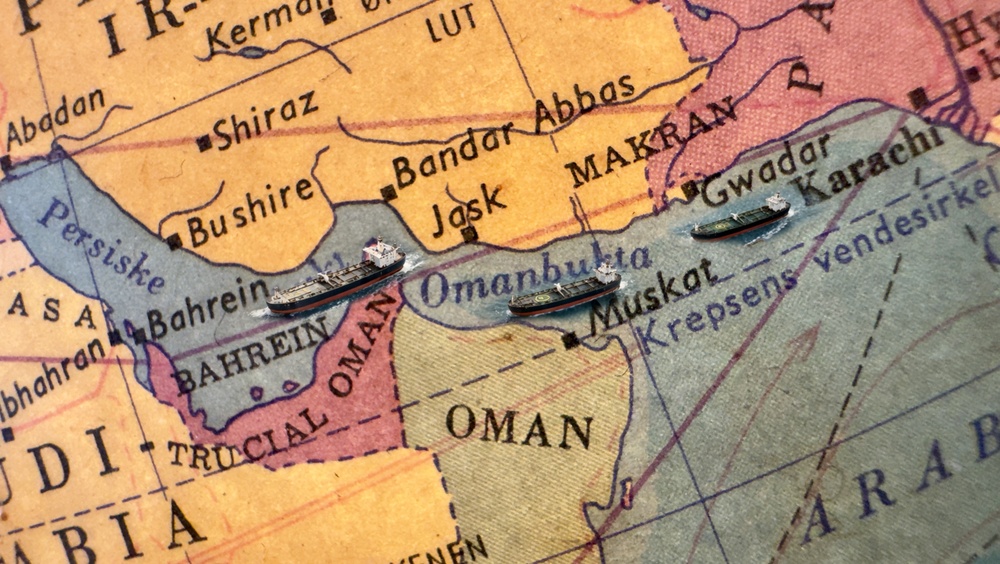
Something shifted in the Gulf yesterday. The foreign ministers of Iran and Oman met in Tehran and signed off a joint statement proposing a temporary shared shipping corridor through the Strait of Hormuz, along with a joint project to clear the waterway of mines. Further talks will cover a permanent route and who ends up administering the strait. Oman’s Badr Albusaidi said afterwards that he hoped the temporary corridor could be announced soon.
The oil market took it seriously. Crude fell for a third session in a row, pushing Brent back below $90 and West Texas Intermediate towards $80. Before the war began in February roughly a fifth of the world’s oil and liquefied natural gas passed through the strait, and most of that traffic has been sitting still ever since. Nothing has reopened yet, mind. Iran’s deputy foreign minister put the remaining negotiations at another 30 to 60 days, and a tanker had its engine disabled by an attack off the Omani coast on Monday night.
Currency markets took the news calmly. The dollar drifted slightly lower again on Tuesday and remains close to its weakest levels in months. The pound is roughly 2% stronger against the dollar than it was a month ago and sits near its best in six months, while against the euro it is holding close to a one-year high.
Cheaper energy is the part of this that reaches everybody else. Expensive oil has been the main reason inflation has refused to come down on either side of the Atlantic, and it is why three of the nine members of the Bank of England’s rate-setting committee voted for a rise last month. Tariffs work the other way, though. The 50% American duties that landed on Canadian goods at the weekend are still feeding through cross-border supply chains, and Ottawa’s response arrives on 8 September. Both are landing on the same central bankers at the same time.
Which makes this afternoon rather well timed. At half past one the United States publishes the personal consumption expenditures (PCE) price index for July, the inflation measure the Federal Reserve watches most closely, alongside a revised estimate of second-quarter gross domestic product (GDP) and durable goods orders. Economists expect the headline rate to ease to 3.6% and the core measure, which strips out food and fuel, to hold at 3.3%. American households already sound uneasy: the Conference Board’s confidence index fell to a seven-month low in August.
All of which lands on Kevin Warsh’s desk at an awkward moment. The Federal Reserve chair gives his first Jackson Hole speech on Friday afternoon, British time. Falling energy costs, nervous consumers and core inflation that will not budge is a difficult combination to sum up in one speech, and markets will be listening for which of the three he thinks is the real problem.
GBP: Interest rates keep the pound in front
Sterling's summer has been built on arithmetic more than optimism. The Bank of England's base rate stands at 3.75%, well above the European Central Bank's 2.25%, and money markets still expect one more UK rise before the year is out. That gap has carried the pound to around its strongest against the euro in a year and kept it firm against a struggling dollar. The next set piece is 17 September, when the Bank's rate-setters meet again after a summer of firmer growth, inflation back up at 2.9% and an uncomfortable set of public borrowing figures.
GBP/USD: the past year
EUR: German businesses in better spirits
German companies are more cheerful than anyone had expected. The Ifo institute's business climate index rose to 88.8 in August, comfortably ahead of the 87.2 forecasters had pencilled in, with manufacturers leading the improvement. That follows eurozone factory activity growing at its fastest pace in more than four years and German second-quarter growth being nudged up to 0.3%. The euro has been the beneficiary, holding near a three-month high against the dollar while staying soft against the pound. Tomorrow brings German consumer confidence figures and the account of the European Central Bank's July meeting, which should tell us how seriously September's rate decision is being weighed.
GBP/EUR: the past year
USD: Odds of a September rise keep slipping
Money markets now put the chance of the Federal Reserve raising rates on 16 September at roughly one in three, down from where it stood a week ago. Softer data has done most of that work, helped along by government bond yields coming off and oil prices falling. Underneath sits a second worry: the cost of American government borrowing, after the 30-year yield touched a 19-year high this month and the Treasury doubled the size of its bond buybacks. This afternoon's inflation reading and Friday's speech are the last two events capable of shifting those odds before the meeting itself.
USD/GBP: the past year
For more on currencies and currency risk management strategies, please get in touch with your Smart Currency Business account manager on 020 3918 7255 or your Private Client account manager on 020 7898 0541.