
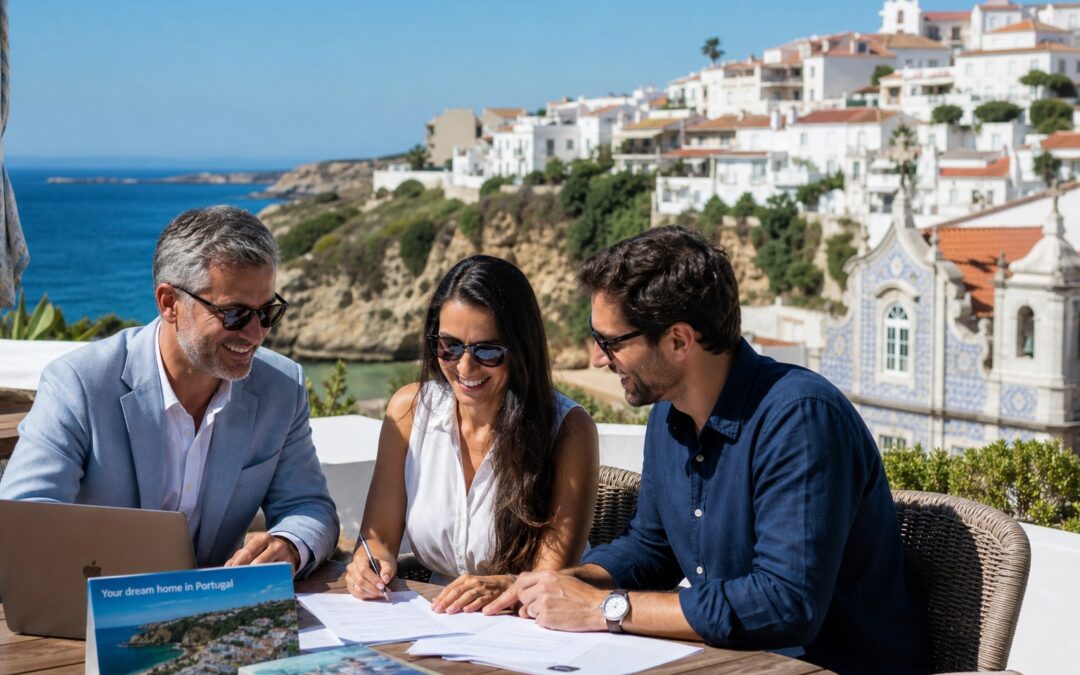
Buying Portuguese property? Good choice! But although a popular choice, there are a few pitfalls – and quite a few opportunities – international buyers need to be aware of.
Portugal continues to attract thousands of new overseas buyers every year, with around 40,000 sales to non-Portuguese buyers each year. Some are looking for a property to retire to but there are also substantial numbers of holiday home and investment buyers too.
However, buying Portuguese property isn’t the same as buying a home in the UK, US or elsewhere. There are essential differences in the process, taxes and rules for using property. So, before you start browsing listings and booking viewings, it’s important to understand how the market works, what costs you’ll face and how exchange rates can affect your budget.
Here are 10 things every overseas buyer should know before purchasing property in Portugal.
1. Anyone can buy property in Portugal
One of Portugal’s biggest attractions is that there are very few restrictions on foreign ownership.
Whether you’re from the UK, US, Canada, Australia or elsewhere, you can buy Portuguese property in your own name. Non-residents generally have the same ownership rights as Portuguese citizens.
To buy you will need a Portuguese tax number (NIF), a Portuguese bank account, proof of identity and, of course, funds for the purchase and associated costs. Many buyers obtain their NIF remotely via a fiscal representative before travelling to Portugal.
For international buyers, Portugal remains one of Europe’s most accessible property markets.
2. Property prices vary dramatically by region
Like any country, there are substantial differences in pricing across Portugal. They are not always obvious. For example, while for tourists the world may revolve around the Algarve, the northern cities far from the beaches can also be pricey, and increasingly so.
Premium markets: Algarve Golden Triangle, Cascais and central Lisbon
For buyers seeking prestige, international communities and long-term capital preservation, Portugal’s premium markets remain highly sought after.
The Algarve “Golden Triangle” encompasses Quinta do Lago, Vale do Lobo and Vilamoura, widely regarded as Portugal’s most exclusive residential market. Property prices here are among the highest in Portugal, but supply remains limited and demand from overseas buyers has proved remarkably resilient over several decades.
Cascais is around 30 minutes from Lisbon and has become one of Portugal’s most desirable addresses. The area has seen particularly strong demand from American buyers in recent years, especially with international executives, remote workers and early retirees.
Lisbon, Portugal’s capital, remains the country’s most important economic centre and has pruces to match.
Mid-market favourites: Porto, Silver Coast and Madeira
For buyers seeking a balance between lifestyle and value, these locations often provide the sweet spot. Porto, Portugal’s second city, has developed into one of Europe’s most attractive urban property markets. It attracts long weekenders by the million each year, but is also a great place to live, but better value per square metre than Lisbon.
The Silver Coast stretches from Ericeira north towards Nazaré and Óbidos and has become increasingly popular with overseas buyers as an alternative to the Algarve. It is not just one of the better value coastal markets in western Europe, but has exciting beaches too, especially the big waves at Nazaré. Madeira, “the island of eternal spring”, is a wonderful winter sun destination which also attracts a large number of digital nomads (of all ages, including the semi-retired).
Emerging and value markets: Braga, Coimbra and the Alentejo
For buyers prioritising affordability and long-term potential, several areas remain significantly cheaper than Lisbon, Cascais and the Algarve.
Portugal’s inland cities such as Braga, Coimbra and Guimaraes are ancient university towns and, like Oxford and Cambridge, are gaining a reputation as tech hubs. Their mix of old and new has made them a favourite with digital nomads and families.
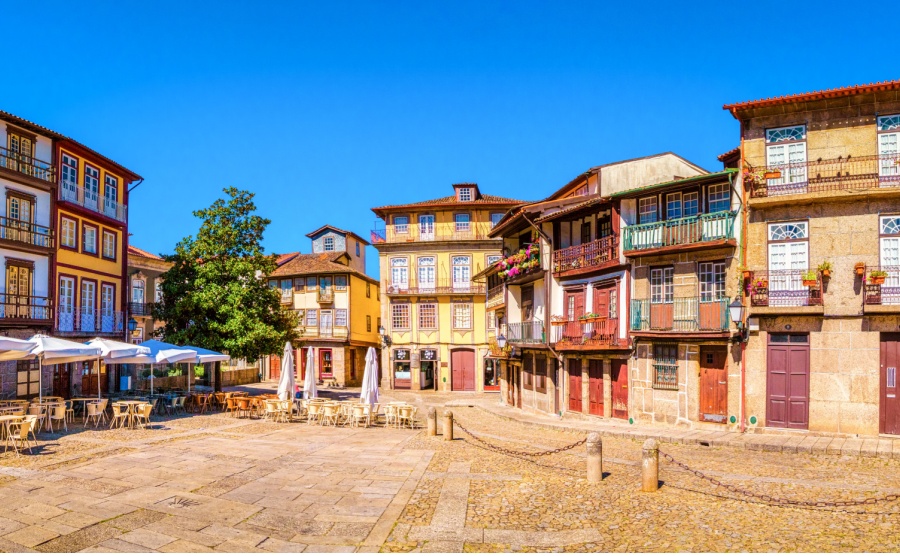
The beautiful city of Guimaraes
Alentejo is the area south of Lisbon and has been gaining a international fans, for its empty beaches, more authentic Portuguese lifestyle and easy accessibility.
Before choosing a location, think carefully about your goals. The best region for rental income may not be the best choice for retirement or full-time living.
3. You’ll need to budget for more than the purchase price
Many first-time overseas buyers underestimate the total cost of purchasing Portuguese property.
In addition to the agreed property price, you’ll need to budget for:
- Property transfer tax (IMT)
- Stamp duty
- Notary fees
- Registration fees
- Legal fees
- Survey costs
- Mortgage-related costs (if applicable)
As a rule of thumb, buyers should allow approximately 7% to 10% of the purchase price for taxes and transaction costs, although the exact amount will vary depending on the property value and circumstances. Understanding these costs early can help avoid budget surprises later in the process.
4. A mortgage may be available to overseas buyers
Many international buyers assume they need to purchase entirely with cash. In reality, Portuguese banks often lend to non-residents, although lending criteria may differ from those applied to local residents.
As in any mortgage, factors lenders typically consider include income, existing debt, credit history, your age and residency status.
Loan-to-value ratios for non-residents are often lower than those available to Portuguese residents, meaning you’ll typically need a larger deposit, probably 40%. You will also have to pay cash for the 8-10% purchase costs, so it is safest to assume you can borrow no more than half.
However, given Europe’s lower interest rates, even buyers who intend to purchase with cash sometimes explore mortgage options as part of their wider financial planning strategy. That may especially be an option for US buyers suffering from a weak dollar – why pay all in cash of those euros are costing so much right now?
5. Portugal remains attractive for investors
Although some government incentives have changed or been lost in recent years, Portugal continues to attract property investors. Indeed, as at the time of writing (June 2026) prices have been rising faster in Portugal than anywhere else in western Europe.
Despite an attempt to arrest the rise in prices, Portugal has been a victim of its own success in attracting international interest, remote workers and tourists. While property prices are never guaranteed to rise, many buyers view Portugal as a long-term investment as well as a lifestyle purchase.
It’s important to assess local market conditions carefully and avoid relying solely on past price growth when making investment decisions.
6. Rental income opportunities still exist
Many buyers plan to offset some of their ownership costs through rental income. Although the Portuguese government introduced the Mais Habitação housing reforms in 2023 to tackle rising housing costs, including restrictions on short-term holiday rentals, many of the most controversial measures have since been amended or reversed by subsequent governments.
Even so, before purchasing specifically for rental purposes, it’s important to understand local licensing requirements, tax obligations and any restrictions that may apply in your chosen area.
A benefit of Portugal is the option to offer either short-term tourist rentals or longer-term rentals to digital nomads and even retirees.
7. Remote working continues to support demand
The rise of remote and flexible working has transformed parts of Portugal’s property market.
Digital nomads, entrepreneurs and location-independent professionals are increasingly choosing Portugal because of its climate, sense of safety, internet infrastructure and welcoming international communities.
Living costs in Portugal are roughly 25% less than the UK’s, and the earnings requirements for a digital nomad visa in Portugal are comparatively light, at around €3,000 per month.
Cities such as Lisbon and Porto remain popular, but demand has also spread into smaller coastal towns and island destinations like Madeira.
For property buyers, this trend has helped create demand beyond traditional tourist seasons, supporting both sales activity and rental markets.
8. The buying process is different from the UK or US
One mistake overseas buyers often make is assuming the Portuguese process mirrors what they’re familiar with at home. Typically, the process involves paying a reservation deposit to take a property off the market. You sign a Promissory Contract (Contrato de Promessa de Compra e Venda) and pay a further deposit to lock in the purchase while the due diligence process happens and final sign the escritura to complete.
Having an independent lawyer review all documentation before signing is essential.
9. Exchange rates can significantly affect your budget
Many overseas buyers focus heavily on the property price while overlooking currency risk. However, exchange rate movements can have a substantial impact on the final cost of a purchase.
For example, if you’re buying a €400,000 property, even a small movement in the pound-to-euro exchange rate could add or remove thousands from the sterling cost.
This becomes even more important when:
- Paying deposits
- Making stage payments
- Waiting for completion
- Purchasing off-plan property
Many buyers choose to secure exchange rates in advance through a specialist currency provider to help protect their budget from market volatility.
- Buying Portuguese property is about more than investment returns
While capital growth and rental income are important considerations, most overseas buyers are motivated by far more than financial returns alone. For many, purchasing property in Portugal is about creating a lifestyle they can enjoy for years to come.
Portugal consistently ranks among Europe’s most attractive destinations thanks to its safety, high-quality healthcare system, pleasant climate and modern infrastructure. Combined with excellent transport links to the UK, US and the rest of Europe, these factors have helped attract a growing international community of retirees, remote workers and second-home owners.
While no property purchase should be made on lifestyle aspirations alone, the strongest buying decisions often balance personal goals with sound financial planning. For many overseas purchasers, the real value lies not only in the potential for long-term property appreciation, but in owning a home that enhances their quality of life for years to come.
Planning Your Purchase Carefully
Buying Portuguese property can be a rewarding investment and lifestyle decision, but it’s important to understand the market, the costs and the practicalities before making an offer.
Taking time to research locations, build an accurate budget and plan your currency transfers can help you approach your purchase with confidence.
Whether you’re buying a retirement home in the Algarve, an apartment in Lisbon or an investment property on the Silver Coast, careful preparation can make the process significantly smoother.