
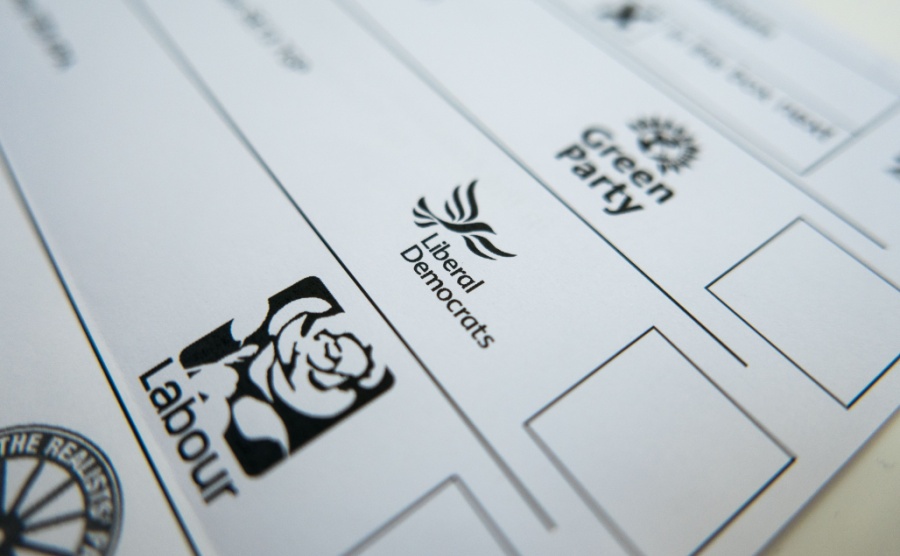
Where are exchange rates as we head into March? It’s all been a bit quiet on the currency markets lately, but that could change this week, with a key by-election in the UK on Thursday that poses risks for the prime minister (image credit above Tereza Wilson / Shutterstock.com).
GBP: Sterling waits for Gorton by-election result
Since last summer sterling has been trading within a fairly narrow range of one or two percentage point against the euro.
What changes there have been have tended to be around the matters of politics, most notably the Labour government’s woes, and economics, with the air seeming to be slowly escaping from the UK economy.
The latter continued last week, with unemployment hitting 5.2% and GDP of just 1%. The good news for the general public was that headline inflation in January dropped to a 10-month low of 3%, driven mainly by falls in petrol, airfares and food prices, but this allows the bank of England to cut interest rates. Again, good for anyone with a mortgage or credit cards debt, but not good for sterling. Money markets currently price in around an 80% chance of an interest rate cut in March.
However, the bigger worry for anyone about to sell sterling is the Gorton and Denton by-election on Thursday, the result of which will be out early on Friday. This should be a safe win even for the unpopular Keir Starmer’s party, but his vote is being squeezed from right and left (Reform and Green) and either could win. If Labour loses a challenge to his leadership is more likely, and the markets are unlikely to reward sterling.
GBP/EUR past year
EUR: Eurozone steady as ECB holds
There’s been little drama in the eurozone lately, while Europeans have been glued to the Winter Olympics. Fun fact: 78 out of 114 gold medals went to EEA countries. The single currency has been less successful in February, losing around 0.5% against the US dollar but gaining that on the pound.
Inflation dropped to 1% or less in several EU countries, but unfortunately GDP was also at little more than 1% too, across the bloc. So the European Central Bank has maintained its interest rate at 2%.
The only other news of interest was the potential departure of ECB president Christine Lagarde ahead of her full term, but even that is not for another year. The fourth anniversary of Russia’s attack on Ukraine has passed, and Russia has not made the breakthrough that some had feared since making gains in November.
EUR/USD past year
USD: Dollar sentiment turning
The US dollar has been relatively volatile, buffeted by interest rate expectations and the continuing drama over tariffs.
This week’s two-hour, rambling State of the Union Address by President Trump attempted to revive his support. Whether such a self-indulgent speech will help is another matter, but the reality is that he faces mid-term elections this year with steeply declining popularity, and this could limit his reach over the second half of the second term.
Part of the problem has been inflation, which at least came down from 2.7% to 2.4% this month. However, according to the minutes of the FOMC, which sets interest rates, there are still worries that inflation remains undefeated and they seem in no hurry to cut interest rates yet.
Trump was correct though, in saying that there are positive signs for the US economy. These include annual GDP growth seemingly twice the level of the UK or EU, unemployment down to 4.3% and a better result than expected for Non-Farm Payrolls
USD/GBP past year
What’s coming up: key events to watch
Looking ahead, several important economic events could influence exchange rates over the next couple of weeks:
- UK, Gorton and Denton By-election (Results 27 February)
- UK, GfK Consumer Confidence (27 February)
- EU, France, Spain, Germany Inflation (27 February)
- EU, Italy GDP (2 March)
- EU, Final PMI (2-4 March)
- EU, eurozone inflation (3 March)
- USA, Non-farm payrolls (6 March)
How to protect your own budget
Exchange rates can shift quickly – and when you’re moving large sums for a property purchase, that can mean thousands gained or lost. Speak to a currency specialist to discuss tools like forward contracts, which let you lock in an exchange rate for the future, shielding your budget from adverse movements.