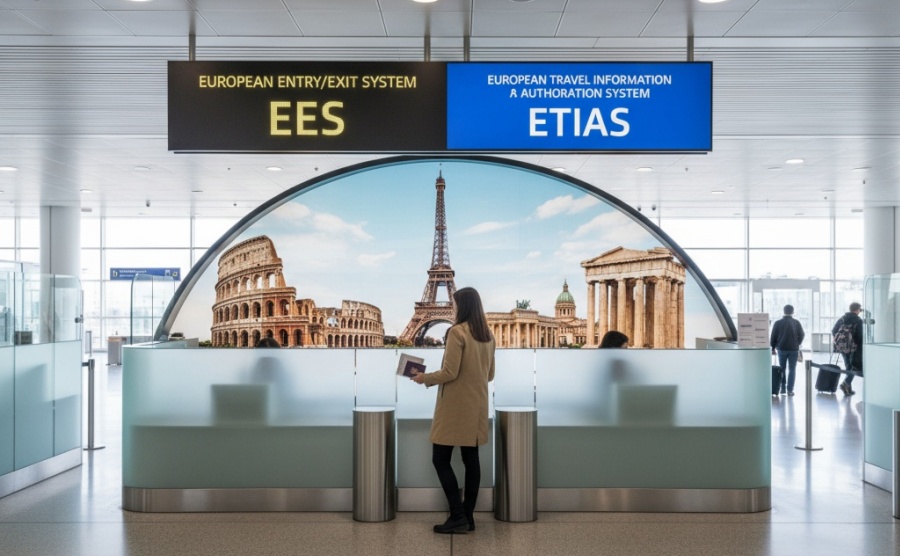
Two new controls at most European Union (EU) borders, EES and ETIAS, come into force in 2026. Indeed one has already started in some areas and on your next trip to Spain, France, Portugal, Italy and elsewhere in the Schengen Area, you will probably be signed up to EES. The second is causing more consternation and leading to misunderstandings. Here’s what it all means for you.
What are EES and ETIAS meant to achieve?
Both systems are intended to speed up processes at the borders, airports and other EU entry points.
EES stands for Entry/Exit System. It is a new digital border-control system for short-stay visitors from outside the EU and Schengen Area. It replaces the old passport-stamp method and should (a) speed up processes at the border, (b) create a computerised record of who is in the country and for how long, and thereby to (c) allow the European Union to enforce its 90-day rule for non-EU visitors more efficiently. The downside is not being able to flick through your passport for fond memories of past holidays.
Rollout began in October of this year and it will be fully operational by April 2026.
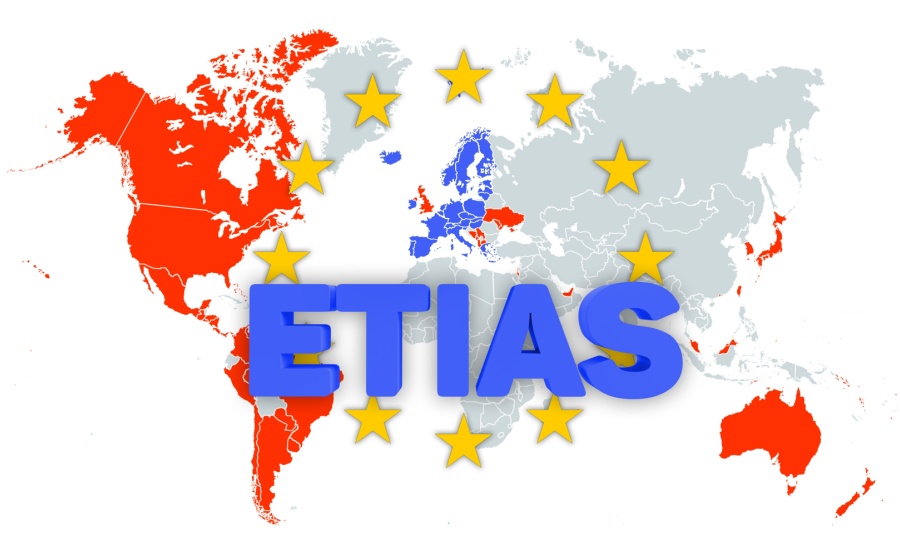
ETIAS stands for European Travel Information and Authorisation System. This is a pre-travel authorisation for citizens of countries such as the UK, USA, Canada and Australia, which you do not need a visa to travel to Europe from. It’s not a visa, but will be required before travelling to the Schengen Area. It is expected to launch in late 2026 or early 2027.
Which countries are affected by EES and ETIAS?
Although we refer to it being the EU’s border system, it actually applies to the 29 countries in the Schengen Area. The good news for British people is that Ireland, although in the EU, is not included. Ireland is covered for British citizens by the Common Travel Area. Cyprus is also not included for now, as it remains outside the Schengen Area.
Practical steps: how to prepare for EES
Do I need to do anything before travel? No. You don’t need to apply in advance or pay a fee. Your biometric registration will happen at the border or airport when you arrive (or depart) via kiosks or border officers.
However, under the EES system existing rules will be easier to enforce. So ensure the following
- Check your passport validity: Ensure that you have at least six-months left on your passport.
- Plan your trip: You may also be asked to prove that you have enough money to fund your trip and about where you are staying. These rules are already in place in many countries, it is simply that travellers are rarely asked.
- Check your 90 days: The EES will record how long you’ve been in the Schengen Area – that’s the point of it – so don’t risk overstaying or you could be fined and banned from the EU. There are various calculators online to help you keep track. Remember, you have 90 days out of 180 in the WHOLE Schengen Area, not just in individual countries
So there is no charge for EES? No, no charge. It’s easy to get the EES confused with ETIAS, see below, the EU’s visa waiver system which will come into operation at the end of 2026 and for which there will be a small cost.
Will EES slow me down at the border? Possibly a little, initially. But for people traveling by air the EES procedure will be when you arrive at your EU destination, not at the airport before you leave. A lot less stressful! Hence you may need to allow time to get to onward travel such as hire car, but delays should be minimal. When traveling by Eurostar or via some UK ports the EES procedure will be on the UK side of the Channel.
Where can I find out more? See the official EES website here. There is further EES information from the UK government here. There is advice from the US State Department on EES here.
How to prepare for ETIAS
There is no need to do anything yet. Indeed you can’t do anything because the system will not be live until late 2026. Once launched, you apply online before you travel, providing your personal and passport details, travel plans and paying the small fee. Your approval will usually arrive within minutes and be digitally linked to your passport. Always apply through official EU channels and avoid third-party websites that charge extra fees.
Will ETIAS be expensive? No. It is likely to be free for anyone under 18 and over 70. For those aged 18 to 69 the cost will be €20. But this is NOT per trip, it’s for the whole three-year duration of your ETIAS.
When will ETIAS begin? The plan is to start in late 2026.
Why is the EU doing this? The EU is simply doing the same as other countries. The UK uses the ETA system for incoming travellers, which costs £16. Read more about the ETA here. The USA also has a visa waiver system, the ESTA and this costs $40.
Key takeaways for travellers
- The EES and ETIAS systems work together: EES manages border entries and exits, while ETIAS authorises travel before departure.
- EES will be automatic and free, while ETIAS will require a short online form and a €20 fee.
- Both systems enforce the 90-day limit within any 180-day period across the Schengen Area.
- For now, focus on being ready for EES for your next trip; ETIAS will follow soon after.
- Always use official EU websites once ETIAS goes live and avoid scam sites.
EES and ETIAS in brief
| Feature | EES | ETIAS |
|---|---|---|
| Who is affected? | Non-EU/Schengen nationals making short stays; biometric registration at the border on first entry. | Citizens of visa-exempt countries who currently travel without a visa for short stays, that includes British and American citizens. |
| What you’ll do | On your first entry, provide fingerprints and a facial photo. No application or fee is required. | Before you travel, complete an online form and pay a small fee. The authorisation will be linked to your passport. |
| Fee | None – EES is free of charge. | Approximately €20 for travellers aged 18–70. Children and senior citizens are exempt. |
| Validity | Your biometric record will be valid for future visits and will track your 90-days-in / 180-days-out rule. | Once approved, your ETIAS will be valid for up to three years or until your passport expires, allowing multiple trips. |
| Purpose | Designed to modernise border checks, prevent overstays and improve security. | Aims to pre-screen travellers, strengthen security and simplify entry into Europe. |
FAQs: EES vs ETIAS
Do I need both ETIAS and EES?
If you’re a traveller from a visa-exempt country (e.g., UK, US, Canada, Australia) visiting the Schengen Area, you’ll need ETIAS (a pre-travel authorisation) once it launches, and you’ll be processed by EES at the border (biometrics on first entry). They serve different purposes and work together. Migration and Home Affairs+1
Is EES fully in operation?
EES went live on 12 October 2025 and is being phased in. It is scheduled to be fully operational across all external border points by 10 April 2026. During rollout, some crossings may continue using manual stamps.
Who is exempt from EES?
EES applies to non-EU/Schengen nationals on short stays. However, children under 12 generally don’t provide fingerprints, and people with certain official roles or documented medical reasons may be exempt from fingerprinting. Holders of EU residence permits/long-stay visas are not processed under short-stay EES rules.
If I have an Irish or other EU passport, am I affected?
No. EU (including Irish) passport holders are not subject to EES or ETIAS for travel within the Schengen Area. These systems target non-EU/Schengen nationals. GOV.UK
Is it safe for the EU to have my biometric data?
EES stores fingerprints and a facial image under strict EU data-protection rules. Data are typically retained three to five (shorter if specific rights apply), and access is limited to authorised authorities for border/security purposes.