

Andy Burnham has begun his premiership with a tax cut rather than a tax rise. From 1 October, the government will temporarily remove the 5% VAT charged on domestic electricity bills, reducing the annualised Ofgem price cap by around £45 for a typical household. The measure will be funded this year by cancelling the planned digital ID programme.
It is a modest saving, particularly while wholesale energy prices remain under pressure, but it supports Burnham’s promise to give households some immediate “breathing space”. It may also reduce inflation slightly and particularly benefit homes using electric heating, heat pumps or electric vehicles.
However, Burnham has also promised greater investment in housing, public services, defence and Britain’s industrial regions, so how will all these be funded? Burnham has acknowledged that taxes could rise, saying people may be asked to pay “a little more” to meet pressures including an ageing population, defence and wider public investment. He has not said which people, which taxes or how much more.
This has prompted speculation about wealth taxes, higher property taxes, capital gains tax reform and even an exit tax on people leaving the UK.
At present, very little has been announced. This article is therefore not a forecast of what Burnham will do. It is a quick guide to the possibilities being discussed.
This article is for general information only and does not constitute tax, legal or financial guidance. Tax treatment depends on individual circumstances and can change.
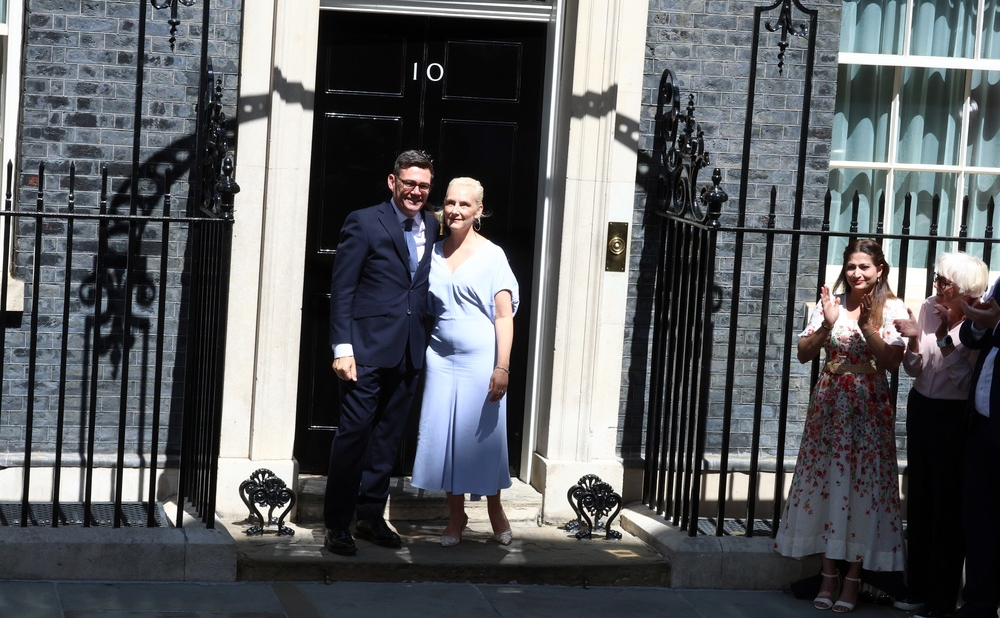
New Prime Minister Andy Burnham and wife Marie France van Heel pose outside 10 Downing Street. (Fred Duval / Shutterstock.com)
The tax possibilities at a glance
| Possible change | What we know now | Who should watch it |
| General wealth tax | No government proposal has been announced | Families with very substantial business, property and investment wealth |
| Mansion tax expansion | A lower threshold has been discussed, but not announced | Owners of high-value UK residential property |
| Exit tax | No policy has been announced | Business owners, investors and people considering leaving the UK |
| Capital gains tax reform | No new rates or rules have been set out | Anyone preparing to sell a business, property or investments |
| Inheritance tax changes | No Burnham reforms have been announced | International families and people with assets in several countries |
| Higher income tax | Burnham has previously indicated openness to a 50% top rate, but has made no current commitment | High earners and internationally mobile executives |
| Sterling volatility | Markets will assess the credibility and funding of government policies | Anyone making a large overseas payment |
A wealth tax
A proposed 2% minimum tax on households with more than £100 million in assets has received considerable coverage. The plan came from economists Gabriel Zucman and Ben Tippet, who estimate it could raise around £10 billion a year. It is not a Burnham government policy.
Fewer than 1,000 households would reportedly be affected by that particular proposal, which would cover assets such as property, businesses, investments and art. Its authors have also suggested keeping departing taxpayers within the scheme for ten years after they leave the UK.
For most affluent households, changes to existing taxes may be more relevant than a new tax aimed at centimillionaires. Capital gains tax, inheritance tax, pension relief and property taxation all have much broader potential reach.
A wider mansion tax
Property appears more likely to feature in Burnham’s thinking. He has previously argued that land is under-taxed and has shown interest in replacing council tax, stamp duty and business rates with some form of land value tax. Any such overhaul would be complex and could take years to introduce.
More immediately, there has been speculation that taxes on expensive homes could be extended to properties below the existing £2 million threshold.
Again, no such change has been announced.
Owners of expensive UK homes should watch whether any future charge is based on ownership, occupation or tax residence. Moving overseas may not help if the tax continues to apply to a property you retain in Britain.
An exit tax
Over the past two years there has been press coverage of wealthy people leaving the UK. An exit tax could be a way for the government to both deter and profit from this. It could impose capital gains tax when someone ceases to be UK resident, potentially treating assets as though they had been sold at their market value on departure.
This would be particularly important for founders and shareholders whose businesses have risen considerably in value, but who have not yet sold their holdings.
There is no Burnham exit-tax proposal. The idea is appearing in commentary because it could discourage wealthy taxpayers from moving before other tax increases take effect.
Those already considering a move should avoid reorganising their lives around rumours. They should, however, establish when they would become non-UK resident and what tax could arise before, during or after departure.
Capital gains and inheritance tax
Increasing capital gains tax or narrowing its reliefs may be easier than introducing an entirely new wealth tax.
Possible options include bringing capital gains rates closer to income tax rates, changing business disposal reliefs or removing the uplift in asset values that can apply on death. Burnham has not committed to any of these measures.
Inheritance tax could also return to the agenda, particularly around business assets, pensions and internationally held wealth.
For private clients, the important question is often timing. A business sale, property disposal, gift or overseas move completed on one side of a tax change may produce a very different outcome from the same transaction completed later.
That is a matter for specialist tax and legal guidance rather than political guesswork.
Could social care costs become less frightening?
For older Britons considering returning from abroad, Burnham’s approach to social care could be particularly significant. Under the present rules in England, anyone with more than £23,250 in assessable capital will generally have to fund their own care. There is no lifetime cap, so someone who spends several years in a care home can see a large part of their savings and property wealth consumed by fees. Certain protections apply, including when a spouse remains in the family home, but the overall cost remains difficult to predict.
Burnham has long supported a National Care Service, with care provided more like the NHS and based on need rather than personal wealth. He is expected to accelerate the government’s work on reform, although no detailed scheme, funding arrangement or starting date has been announced. One idea associated with him is replacing inheritance tax with a levy on estates, allowing care to be provided without individuals exhausting their savings during their lifetime. That might give returnees greater certainty, but it could also mean more estates paying a charge after death, including some that currently pay no inheritance tax.
For now, nobody planning a return to the UK should assume that care will become free. The important details will be what services are covered, whether accommodation costs are included, how any levy is calculated and how the rules treat property and assets held overseas.
What could it mean for sterling?
Markets will be watching how Burnham pays for his plans. Large spending commitments without convincing funding could put pressure on UK government bonds and sterling. A credible package, or policies believed to support economic growth, could have the opposite effect.
For anyone buying property abroad, emigrating or moving the proceeds of a business sale, political uncertainty can become currency risk.
A 3% movement on a £1 million overseas transfer changes its value by about £30,000. That could matter more to your final budget than many of the taxes currently being discussed.
You do not need to predict the next political announcement to manage that exposure. Depending on your timetable, options can include buying currency in stages or using a forward contract to fix an exchange rate for a future payment.
What should wealthy private clients do now?
The immediate answer is not to sell assets or leave the UK because of an unconfirmed newspaper report.
Instead, identify transactions you may make over the next year or two. These could include selling a company, disposing of investment property, drawing pension funds, making substantial gifts or buying a home overseas.
Speak to tax and legal specialists about how current rules apply and what flexibility exists around timing. Then consider the currency requirement separately.
Smart Currency Exchange can help you plan the transfer of large sums overseas, including fixing an exchange rate with a forward contract where appropriate. This will not protect you from a tax change, but it can prevent currency volatility adding another unknown to an already uncertain decision.
Frequently asked questions
Has Andy Burnham announced a wealth tax?
No. A 2% tax on households worth more than £100 million has been proposed by external economists, but the government has not adopted or announced it.
Is an exit tax being introduced?
No exit tax has been announced. It remains one of several ideas being discussed by tax professionals and commentators.
Could moving overseas avoid future UK tax rises?
Not necessarily. Your liability may depend on when UK tax residence ends, what assets you retain and the rules governing particular taxes. Specialist cross-border tax guidance is essential before moving or selling assets.