
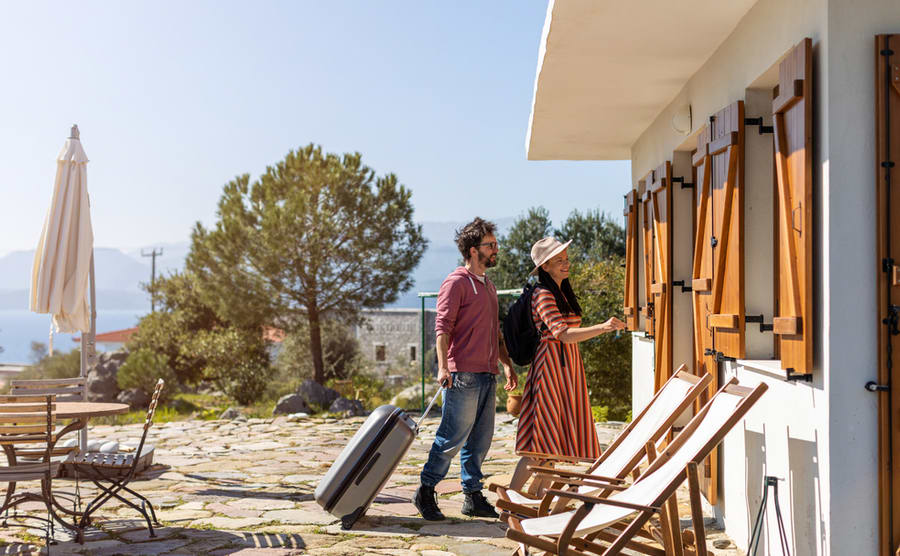
Half term is upon us. Suitcases are being hauled out of cupboards, car boots being loaded, guide books consulted, passports checked and holiday cash ordered. (Hopefully you didn’t leave this last item too late and end up paying over the odds at your high street bank?)
Things can be a lot easier when you own a second home abroad. Going to a place you know well, to see old friends and where you know you’ll love the accommodation.
But there’s a lot to consider when buying a property overseas. Here we map out a simple process to get you on your way. And while forgetting to order your holiday cash is an annoying oversight for a holiday, failing to create an effective currency plan can create big problems when buying bricks and mortar…
To help straighten things out and make the prospect a little less daunting, we’ve put together five simple steps for aspiring overseas buyers to follow.
Step 1: Speak to a currency specialist
Before you buy your very own holiday home, you need to know what your budget is. Even property buyers with the largest budgets won’t quite get the headline rate you hear on the news (the ‘interbank’ rate), but you’ll get pretty close to it with a property specialist like Smart Currency Exchange.
Your account manager will give you a quote based on your budget and timescale, so you will know exactly what you have to spend on a property at today’s exchange rate. Then you can choose to lock in that rate with a forward contract, or take your chance on the spot rate when you come to complete.
Our account managers at Smart Currency are well used to assisting buyers with overseas property purchases, and helping buyers make the most of their budget.

Get started today
Step 2: Pinpoint your priorities
The first question you need to ask yourself is, ‘what are my holiday home must-haves?’ For example, if you’re looking for a summer home to escape to when the British summertime disappoints. If so, surely a pool with somewhere to lounge might be nice? Perhaps, a home within walking distance of the beach might be a priority of yours.
Once you can answer what your holiday home priorities are, you’ll have a better idea of locations available to you that fit your criteria. Download the Viewing Trip Guide from Your Overseas Home for more tips.
Step 3: Decide how will you get there
Deciding on an area can be tricky, what with the whole world to choose from. So how do you get around the ‘paradox of choice’, so much choice you can’t decide?
Firstly, think practically about how much you like travelling, what you find irksome or off-putting, and be true to yourself. If a four-hour flight is two too many, you’re already narrowing your options.
What is your closest airport to home? Are there frequent flights to your chosen country and to what airport? It’s wise not to rely on just one budget airline as they frequently change routes.
And when you get there, how far would you like to travel? For a home you wish to rent out, distance from the airport can be crucial. And if you want your holiday home to offer a cheap getaway, you wont want to hire a car on each trip, so ensure there is public transport available.
Step 4: Schedule a viewing trip
Just as you would view any property in the UK you’re interested in, you need to do the same for property overseas. Even new-build homes (also known as off-plan properties) will have a show home available for you to view to see what it will look like following renovations.
Your estate agent can help you organise your overseas viewing trip. Often they can arrange viewings to homes that aren’t even on their books, but they can liaise with the seller/agents on your behalf. This makes it a lot easier for you in the long run as you only have to deal with one point of contact (your estate agent).
Don’t forget, you can view properties in France, Spain, Cyprus, Italy, Portugal and Greece on our partner site, Your Overseas Home’s property portal
Step 5: Plan for ongoing costs
Before you sign on the dotted line, you need to plan for the ongoing costs of your holiday home. This involves running costs, general upkeep, taxes and – if you’re going to rent it out – cleaning fees and keyholders.
The cost of these things depends on how often you plan to occupy your holiday home. If you plan to leave it empty in autumn and winter, who will be checking on the property in your absence? If you plan to let it out (even if to family and friends), who will organise key handover and cleaning of the property?
You can find management companies who will do all of these things for you for a price. Often, your estate agent will have a contact they can put you in touch with.
In terms of actually making the payments, you can save yourself time and money by using a currency specialist like Smart, which offers regular and automated payment services. These do not come with fees and generally work out a lot cheaper than using your high street bank. Plus, a call to your personal trader is free, and you won’t have to do it every month with an automated payment plan. We’ll do all the admin for you.
If you’re interested in regular and automated payments, make an enquiry today with your personal trader or get a free quote with Smart today to get started.